Wednesday, May 30, 2012

Culture and Art in 21st Century Amman


By Miri


Travel guides to Middle Eastern countries tend to either reduce local artistic expression to antique artefacts, usually found at historical or archaeological sites, thereby situating the apex of creation in the past, or, to emphasise what is commonly referred to as “authentic” or “folkloric” culture, such as Bedouin tents and belly dance. Artistic and cultural forms of expression that do not fit those categories are commonly relegated as “Western”, or as “influenced by the West”. This attitude obviously ignores the fact that Western culture is and has always been influenced by Eastern culture and vice versa. It furthermore simply omits the richness of works of contemporary Middle Eastern artists, architects, musicians etc. who, just as creative people in the West, strive to find their own voices and their personal ways of expressing themselves. 

Amman's Citadel, one of the main tourist sites of the capital.
An Amman tour is very illustrative of that argument. Jordan's capital unquestionably features a big number of unique historical sites which are definitely worth a visit. Focussing only on its past, however, will make you miss out on a whole dimension of Amman, which contributes to its relevance within the greater Middle Eastern cultural and art scene.

The city offers quite a few art galleries and museums, displaying a great variety of contemporary art that originated from all over the Arab World. The most institutionalised of these museums is probably the Jordan National Gallery of Fine Arts, which showcases more than 2000 works, including paintings, prints, sculptures, photographs and installations by more than 500 artists from 59 countries, mainly in Asia and Africa. 

Sculpture in the garden of Darat al Funun
Similarly, Darat al Funun aspires to provide a space for contemporary Arab art, especially for young upcoming artsist and presents itself as “a home for the arts and the artists of Jordan and the Arab world”. It's ambition to point out the continuity of local artistic expression from antiquity up until the present is already illustrated in its choice of location in three traditional buildings situated next to the ruins of a Byzantine church from the sixth century, which itself was built over a Roman temple. Other than its exhibition space, Darat al Funun also operates open studios, which can be used free of charge by local and resident artists and where regularly workshops are being held. During its respective temporary exhibitions, Darat al Funun organises thematically related programmes, such as lectures and other events from the realm of performing arts. Every summer the institution organises “a multi-disciplinary annual celebration of the visual and performing arts”, a festival featuring the work produced in its studios and by the students of its annual summer academy. 

Any lover of contemporary visual arts will thus surely not be disappointed by the variety offered in the galleries of Jordan's capital, but also for those music fans, who want to listen beyond the traditional oud player and belly dance music, Amman has a lot to offer. 
One of Amman's most impressive archaeological sites, the Citadel, is frequently turned into an open air concert venue where internationally renowned artists, such as jazz singer Diana Krall, hit the stage. Probably even more memorable to the local audience are however those concerts featuring musicians from the Arab World, such as the Lebanese indie band Mashrou3 Leila which conquered the Middle Eastern audience in a storm and has already established itself a solid fan base in the West. 

Within the capital, musicians of all creeds have been working hard to create their own musical identity and Amman's music scene is growing and flourishing and spans across a great variety of genres, including heavy metal, indie rock, pop and more. The band Autostrad which fuses Reggae, Funk, and Rock with elements of more classical Arabic music, complemented by lyrics sung in the local street slang, has a lot of followers that reach far beyond the Jordanian borders. 

Amman's DJ Shadia
Amman's female musicians are just as creative and successful as their male counterparts. In 2007, singer-songwriter Ruba Saqr won the UNESCO prize for Best Innovative Performance for Bridging Traditional and Contemporary Traditions. Amman's DJ Shadia is reportedly the first female DJ of the Arab World. Starting her career at local radio stations, Shadia greatly contributed to popularising Hip Hop and electronic music in Jordan. Very soon she also became a celebrated live DJ and has toured clubs and venues in nearly all Middle Eastern countries, opening for international superstars, such as 50 Cent and Sean Paul. 

The list of what to hear, see and do can be extended endlessly, suffice it to say, that it is definitely worthwhile to look beyond what your tour guide suggests you, and to think beyond the dichotomies of East and West, authentic and imported culture and to go on a search for all the treasures that contemporary Amman has to offer.

Green Olive Tours is organising tours in Jordan, including an Amman tour. Contact the Tours Coordinator for details.

Comments

Tell your friends. Help spread the word . . . .

Twit it Sphinn it Add To Del.icio.us Digg it Add To Google Bookmarks Add To Reddit Add To Technorati Add To StumbleUpon Add To Facebook Furl it Subscribe to RSS

Thursday, May 24, 2012

Green Olive Tours Recommends: DIY Tel Aviv

By Miri

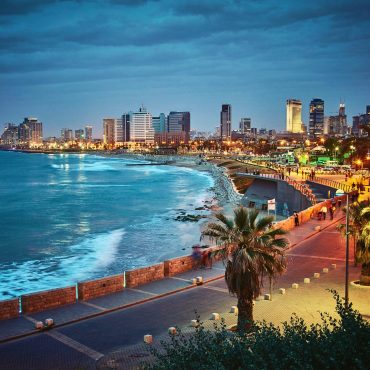
For a Middle Eastern country Israel is as Western as it gets and Tel Aviv is probably the queen of Westernness. And yet, for a person who sets her/his foot for the first time into this place, it can get quite confusing. Shimrit Elisar took it on herself to ease this experience by publishing a very special guide to the city, DIY Tel Aviv, the Alternative City Guide. 

On her website she emphasises her being conscious of Israel doing a whole lot of “nasty stuff”, and that by pointing out the good stuff, she's not aiming to whitewash all that is wrong in this country, but rather to put a spotlight on those people and on those spots that are remarkable and special. While not being an explicitly political project, Shimrit however points you to places, activities, people and groups that do not fit the Israeli mainstream and that may be hard or even impossible to find, if you don't have any previous knowledge or contacts in the city. Consequently, the guide is especially (but by no means exclusively) useful for people identifying with a particular subculture or group, be it members of the LGBTQ community, vegans, bike fanatics, or hipsters. 


DIY Tel Aviv is above all a personal project, and apart from practical information, such as cheap accomodation, including private rooms, transport etc. as well as useful explanations about what Shimrit calls the “quirks” of Israel, such as questions of security (a section entitled with “Will I get blown up?”), the Kashrut (the Jewish dietary rules), as well as religious and national holidays, the author focusses on those questions she poses herself whenever she visits a new place: 
“When I travel I’m always looking for those little surreal and magical moments that make every long journey worthwhile. I hope this guide will help you find some of your own magical moments during your stay in Tel Aviv, or at the very least point you in the direction of places that don’t suck.”  
Obviously it's a matter of taste what you consider to be constituting a magical moment, but as far as I'm concerned, Shimrit shows great taste, whether it's about hang-outs, bars, restaurants, cafés, shopping, art venues, clubs and everything underground in Tel Aviv, and I can assure you that a whole lot of experienced Tel Avivians, including myself, also frequently follow the daily updated recommendations given on her blog or facebook site

Apart from the huge amount of useful information and great recommendations, DIY Tel Aviv is captivating in its humorous language and its sincerity. Shimrit surely doesn't mince matters, whether it's about the tendency of Israeli men to have sex without using condoms or the fact that most cheap bikes you can get in the city are “usually either shit or stolen (or both)”. At the same time, through her explanations, advice and descriptions, the author manages to show you a glimpse at urban Israeli society within the specific context of Tel Aviv. 

Last but not least, Shimrit also included a section in the guide that points visitors to possibilities to find out more about and/or engage with political issues in Israel, covering a whole range of themes, including animal rights, feminist issues, anti-Occupation etc. The section includes a useful list of info shops, activist hang outs, possibilities to volunteer, NGOs and activist groups and of course political tours, including Green Olive Tours. 

Within the politically charged climate of Palestine/Israel, DIY Tel Aviv is a rare example of a guide to the “bubble”, one of the many nicknames of the city, that neither tries to stay neutral, nor is condemnatory of the fact that the population of Tel Aviv not only tries to get on with their lives, but also manages to create beautiful and magical spaces and moments. It is written by a sensitive person who truly knows and loves her city, but nevertheless remains critical and conscious of its negative sides, as well as of the overall context within which it is located. 

Last but not least, the guide is ridiculously cheap, especially if weighed against the love and care that Shimrit obviously put into the work. It is downloadable as pdf here for only £5/$8/€6, including free monthly updates, and soon also available as an actual book.

Comments

Tell your friends. Help spread the word . . . .

Twit it Sphinn it Add To Del.icio.us Digg it Add To Google Bookmarks Add To Reddit Add To Technorati Add To StumbleUpon Add To Facebook Furl it Subscribe to RSS

Sunday, May 20, 2012

Historical View at the Jewish Community in Hebron


By Miri

As a matter of fact historic Palestine always also was the home of a Jewish community. Hebron is considered to be the site of the oldest Jewish community in the world and thus looks back at a long turbulent history, a history that extends into the present and raises crucial questions about the future of Palestine/Israel. 


Old painting of Hebron
The city is first mentioned in the book of Genesis, as the site that Abraham/Ibrahim, the great patriarch of Judaism, Islam and Christianity, chose for his residence after his arrival of what was then referred to as the land of Canaan. The story continues with him purchasing a plot of land in order to lay his wife Sarah to rest, the same plot that should later turn into one of the most contested sites in the conflict between Jews and Arabs, the Tomb of the Patriarchs and Matriarchs, where Abraham, Isaac, Jacob, as well as Rebekka and Lea are said to be buried. 
Both the Arabic name “al Khaleel”, as well as the Hebrew “Hevron” probably stem from the respective word for “friend” and allude to God choosing Abraham as his ally. During both the First and the Second Temple periods Hebron is mentioned as one of the major sites of Jewish residence, and also afterwards, throughout many centuries and under different sovereigns, a mainly Arabic speaking Jewish community called Hebron its home. 


Desecrated synagogue in Hebron, 1929 
Up until the time of the British Mandate over Palestine, the Muslim and the Jewish communities of Hebron coexisted peacefully, yet with the 1917 Balfour Declaration, which affirmed British support for the establishment of a Jewish state within Palestine, the relations grew increasingly tensed. 
After a provocative action by a Jewish nationalist group at the Wailing Wall in August 1929, radical Muslims started attacking members of the Jewish community in Jerusalem. In response to this, the Haganah, a Jewish paramilitary organisation which would later turn into the Israel Defense Forces, proposed to the leaders of the Jewish community of Hebron to defend them, or alternately, to help them to evacuate from the city. Putting their trust into the Arab notables of the city, Hebron's Jewish leadership declined the offer. Following the Jerusalem riots, a rumour started spreading that Jewish militants were planning to attack al Aqsa mosque which led to violent clashes all over Palestine. In the course of events a total number of 67 Jews were killed in Hebron. Another 435 members of Hebron's Jewish community were saved by their Muslim neighbours, who at great risk for themselves, provided them with protective shelter in their homes. 
The survivors of the massacre were evacuated by the British authorities, yet in 1931, a great number of them returned, insisting that Hebron constituted their home. With the outbreak of the Arab revolt in 1936, however, all but one family were evacuated again. This last family insisted on staying until the eve of the war of 1948. With the end of that war and up until 1967, Hebron came under Jordanian sovereignty and Jews did not have permission to enter the city. 


Sign errected by Jewish settlers in the Old City of Hebron
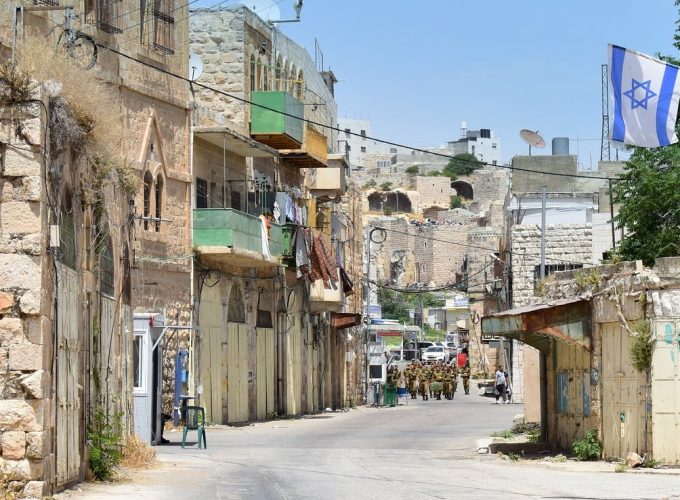
In 1967 Israel took control over the West Bank and Gaza and in 1968 a section of the nascent extremist settler movement occupied a hotel in Hebron and refused to leave again. Supposedly aiming to appease them, the Israeli government agreed on the foundation of the first settlement, Kiryat Arba in 1970, which constituted the starting point of the establishment of a whole infrastructure of settlements in and around Hebron. Kiryat Arba by now counts over 7000 inhabitants and is considered to be a bastion of right wing Jewish nationalism. 
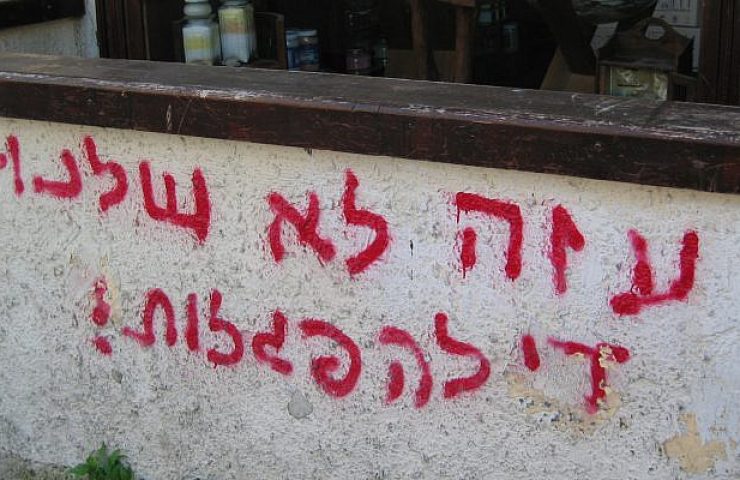
Although almost none of the settlers living in Hebron today are descendants of the community that lived here before 1948, they frequently seek to legitimise their presence and actions by referring to their predecessors. The actual descendants of Hebron's old Jewish community on the other hand, in fact often publicly distance themselves from today's settlers. Shabtai Gold, for instance, whose grandfather survived the massacre of 1929, was quoted as saying that his family dreamed of returning to Hebron, but that they refused to live in a city where Palestinians had no freedom of movement and where walls were filled with graffiti reading “death to the Arabs”. Gold was especially disturbed by the acts of violence and vandalism against Palestinians: "This way of doing things was not the way of the old community, what we are saying is don't use our name to justify the violence."


Comments

Tell your friends. Help spread the word . . . .

Twit it Sphinn it Add To Del.icio.us Digg it Add To Google Bookmarks Add To Reddit Add To Technorati Add To StumbleUpon Add To Facebook Furl it Subscribe to RSS

Tuesday, May 15, 2012

The Nakba in Israeli Society

By Miri

Today, May 15th marks Nakba Day. Nakba means “catastrophe“ in Arabic and refers to 1) the events that took place during the war of 1947/1948, usually referred to by the Jewish-Israel discourse as the War of Independence, during which an estimated number of 750,000 Palestinians were expelled and/or fled from their homes and hundreds of villages and towns were depopulated and destroyed and 2) to the continuation of displacement and dispossession of the Palestinian population across the whole of historic Palestine up until today.

Obviously, there are great discrepancies between the official Israeli and the Palestinian narrative of the events of 1948. The official Israeli version claims that after the Palestinian leadership had rejected the UN partition plan, which would have led to the establishment of both a Jewish and a Palestinian state, a war broke out during which a small number of Jewish soldiers fought and defeated a much greater number of Arab fighters from the surrounding countries.
According to the Israeli narrative, the local Palestinian population, caught up in the crossfire, voluntarily fled their homes to the neighbouring Arab countries, believing they would return after the country would be liberated from the Jews. Although Israeli historiography does not speak with a unified voice, and especially since the late 1980s and 1990s more and more critical perspectives emerged and started challenging and eventually dismantling the myths surrounding the foundation of the state, it is safe to say that the majority of the Israeli public rejects or denies notions, such as ethnic cleansing, to describe the events of 1948.

Most recently Israeli Minister of Culture, Limor Livnat, expressed her confusion about a map published by the Israeli NGO Zochrot (Hebrew: "remembering"), whose mission it is to raise public consciousness about the Nakba. Said map showed the locations of the more than 400 villages and towns that were destroyed by Israeli forces. Livnat was quoted as saying: “They present a map, and the map has dots. Dots, dots, dots […] from the north of the country to its south, south of Be’er Sheva. And these dots, which are the villages we’re talking about, the points are all in the State of Israel! Not in Judea and Samaria, not in the Gaza region, not in what you call the Occupied Territories […] Here, inside Tel Aviv! I found some like that in the Tel Aviv area, dozens of dots.“

Livnat's reaction constitutes a testimony of the success of the efforts of the Israeli government to erase the Nakba from Israeli collective consciousness, as well as from the Israeli landscape. Most of the Palestinian villages that were deserted during the events of 1947/1948 were bulldozed in the 1950s and were thereafter turned into Israeli settlements, or planted with trees so as to remove all signs of earlier habitation. Hebrew-language history books focus on the heroism of the Jewish forces, while glossing over the mass exile of Palestinians. If mentioned at all, it is usually attributed to a voluntary mass flight, rather than a deliberate expulsion. 

In 2009 Israel's ministry of education has further ordered to drop the concept of Nakba also from Arab school text books. In the same year, Foreign Minister Avigdor Liberman's extreme right party proposed a law to criminalise the marking of the anniversary of the Nakba. In March 2011, a “softened” version of this law was passed, which allows the Ministry of Finance to fine municipalities, public institutions or publicly supported organisations if they believed that these bodies oppose the interpretation of the term “Jewish democratic State” and/or express feelings of mourning related to the Israeli Independence Day or the Nakba. Israeli NGOs affirmed that the bill clearly violates the right of the Palestinian communities to assert their cultural and historical identity by interfering with their right to freedom of opinion and expression.
The bill furthermore prevents the Jewish Israeli public from learning about the Nakba, an essential part of their own history, and inhibits a process of genuine reconciliation which necessarily has to be based on the acknowledgement of the plight of the other.

Right wingers disturb a Nakba event at Tel Aviv University, May 14th, 2012, sign reading "When I got to this country, there wasn't a Palestinian people - Golda Meir" Photo: Oren Ziv/ActiveStills

Green Olive Tours forms part of a small circle of Israeli organisations and initiatives that try to work against the erasure of the Nakba. 
In several of our tours, especially those beyond the Green Line, such as the Jaffa and Tel Aviv Walking Tour and the Jerusalem Tours, participants learn about the events of 1948 with reference to those specific places. Our Bethlehem and Nablus tours include visits to refugee camps which are especially revealing in terms of the relevance of the Nakba for today. For people with a special interest in the events of 1948, Green Olive Tours provides the possibility of arranging custom design tours, including meetings with Palestinian time witnesses.


Comments

Tell your friends. Help spread the word . . . .

Twit it Sphinn it Add To Del.icio.us Digg it Add To Google Bookmarks Add To Reddit Add To Technorati Add To StumbleUpon Add To Facebook Furl it Subscribe to RSS